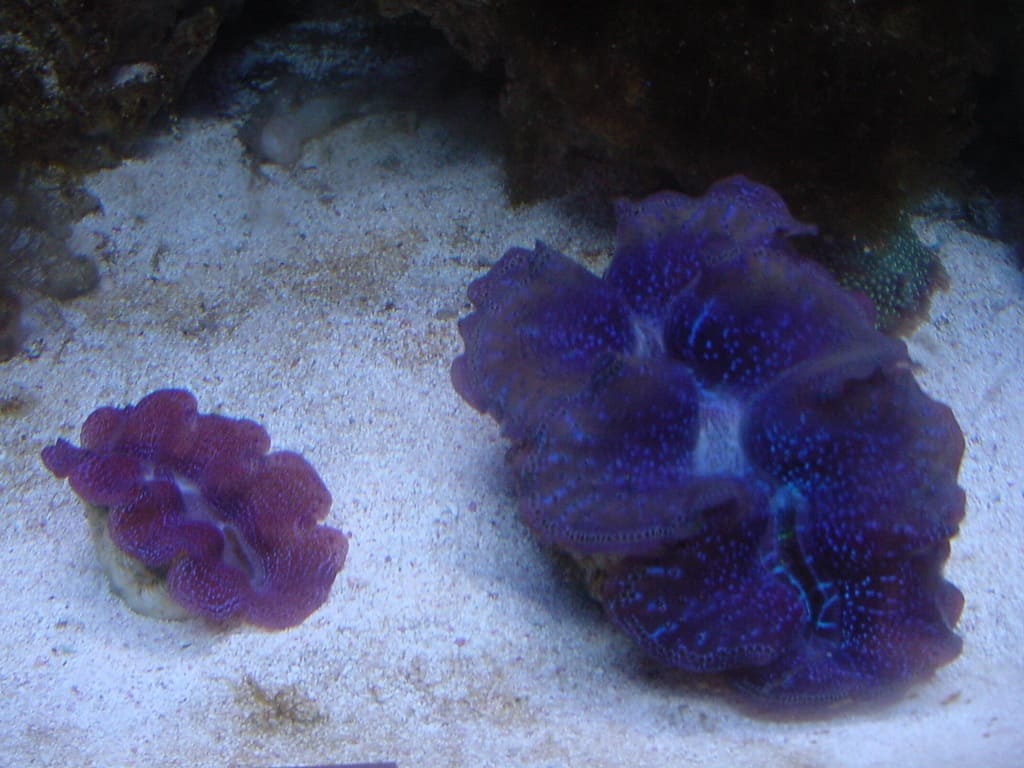
Giant Clams
TO ORDER GIANT CLAMS SCROLL DOWN THIS PAGE
Besides marine fish and live coral, 5 star fish offers giant clams that not only show extraordinary color but they also help marine aquariums by absorbing nitrates and ammonia. Our giant clams have vibrant coloration, and each one is unique. They are farm-raised in the Indo Pacific by local islanders, thus putting less stress on the environment. Some of these giant clams can grow to a yard across and weigh up to 400 pounds in coral reefs. Clams, such as Tridacnid crocea, T. maxima, T. derasa, and T. gigas, are available for your reef aquarium in smaller sizes usually 1 to 8 inches across. They will add special beauty to the reef aquarium.
General: Giant clams also known as Tridacnid clams are found in shallow waters at the top of reefs in the Indo Pacific. They have the same requirements as small polyp stony corals. They need bright light, good water quality, low food / nutrient levels. Good circulation, and good calcium levels. Giant clams are defenseless against predators such as bristle worms, they can easily kill these clams. Simple inexpensive bristle worm traps as well as arrow crabs can be used to help control bristle worms.
Additives: Regularly use additives containing at least calcium and iodine. Excessive strontium levels above what would be encountered on the reef should be avoided. In the book titled Marine Reef Aquarium Handbook it states that strontium can be harmful to giant clams.
Circulation: Provide moderate to strong circulation.
Lighting: Placing them close to strong VHO or power compact lighting may be adequate but metal halide lighting or LED lighting is highly recommended.
Food: Giant or Tridacnid clams are filter feeders, but feeding does not appear to be very important because the symbiotic algae living inside their flesh produces much of their food, also they sometimes eat this algae as a direct food source.
Placement: They are typically placed in sand on the bottom of the tank, however they should be in an area where light is abundant.
View Selection of Giant Clams Here
________________________________________
Tridacna crocea
Often with an electric blue coloration
View Selection of Various Giant Clams Here
________________________________________
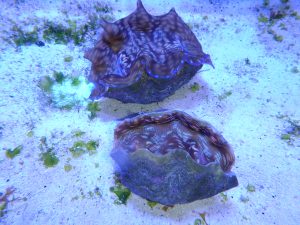
Tridacna derasa
Similar in appearance and quite beautiful patterns but less vibrant colors than T. crocea
View Selection of Various Giant Clams Here
________________________________________
Tridacna maxima
Often with an electric blue coloration
View Selection of Maxima Clams Here
________________________________________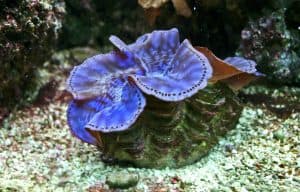
Tridacna Squamosa
View Selection of Various Giant Clams Here
Books
In his book Daniel Knopp covers many aspects of giant clams from anatomy and ecology to practical information on keeping them in the reef aquarium.
255 pages 325 color photos.
For more invertebrate choices see:
Starfish
Lobsters and Shrimp
Crabs
Snails
Clams
Giant Clams
Sponges
Saltwater Aquarium Plants
Clean up Crew Packages
Or Click Here For General Information On Invertebrates.